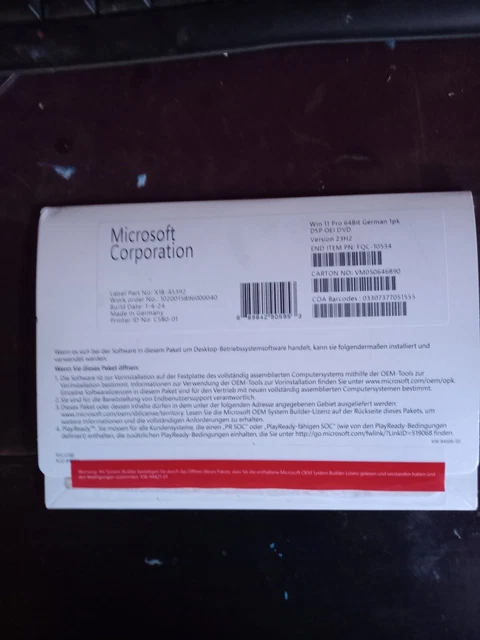
The demise of support for Windows 7 marked more than just the sunset of an operating system. it marked the end of an entire era of management and licensing for software. For individuals and businesses clinging to `windows 7`, the upgrade path to Windows 11 is not a simple re-installation--it's a migration to a fundamentally different digital paradigm. The new paradigm encompasses everything from how Windows 11 lizenz is purchased to how Office operates and how users work. Cloud-integrated licensing, digital licenses and ecosystem-wide protection have replaced single-time-purchases, physical media or isolated software suites. Navigating this transition requires understanding ten critical intersections between legacy practices and the latest requirements in which decisions regarding your OS directly impact your productivity suite, security position, and future scalability.
1. Hardware Gauntlet. The First Step.
Windows 11 hardware requirements must be met before you can even think about buying Windows 11 (TPM 2.0 Secure Boot, modern CPU). This check will fail many Windows 7 machines, particularly those older than 2017. This isn't a Microsoft cash-grab, but rather an obligation to protect yourself. These features are the "hardware roots of trust" on which modern security solutions such as Windows Defender, and even third-party security products such as Kaspersky Premium, rely. In the absence of ISO requirements by using non-official ISO modification creates a system that's unstable, not supported, and could void the core security features of the upgrade. This makes you more vulnerable on Windows 7 than it was before.
2. The License Myth about Migration: Your Windows 7 Key is (Mostly) obsolete.
The past was when you could make use of the Windows 7 Pro key to activate Windows 10. This time-frame for grace periods with Windows 11 is now over. Windows 7 OEM licences are not valid for Windows 11 installations if your hardware is not up to date. The new version will be a new start. This means that your search for `windows 11 lizenz buy is a new procurement exercise which requires you to learn the modern OEM vs. retail market from beginning.
3. The Office Licensing Revolution.
If you're running Office 2010 and 2013 installed on Windows 7, then you're accustomed to having a perpetual office licence. Office 2021 was a dead start product on the day it was launched. It received security patches but did not have any new features. Microsoft 365, the subscription-based upgrade to productivity, is currently the preferred option. This is a significant change that you're no longer just upgrading Office and Office 365; you're also embracing an identity cloud (Azure AD) with 1TB of OneDrive storage, and also enabling real-time collaboration. Your old habit of `office licensing every 10 years should be reevaluated in favor of an ongoing operating expense which includes ongoing updates and services.
4. Security isn't an afterthought. It's time to change the way we think about security.
Windows 7 likely had a plan that utilized a third-party antivirus suite, similar to the Norton 360 version of. Windows 11 completely changes the landscape. Windows Security, which comes with Windows 11, is now an integrated cloud solution of the best quality. The installation of a previous third party suite may result in conflicts and performance issues. If you're upgrading to a new version, it's the perfect opportunity to review your. Do you require a different suite like `kaspersky premium`, or does Defender together with modern hardware security features, provide sufficient protection? The answers will vary based on your threat model. But the idea that you have to purchase an antivirus program separately is no more the case.
5. The Clean Install Imperative and Data Migration Strategy
Upgrading in-place from Windows 7 to 11 is not supported and is a recipe for instability. It is not an unintentional reinstall. This process forces a disciplined data migration. It is now the time to adopt cloud-based backup strategies and stop using local drives. Microsoft 365 includes OneDrive. Setting up Known Folder Move during setup (to backup Desktop, Documents and Pictures) changes your data migration into a seamless cloud-synthesizing and ongoing process. You can now move your data from being computer-centric to user-centric.
6. The Professional Feature Crossroads: Pro is the new Minimum.
Windows 11 Pro must be purchased when Windows 7 Professional was used for BitLocker hosting domain joining Remote Desktop, or BitLocker. This is a mistake you should avoid for any professional or commercial use. Home cannot join domains, isn't equipped with BitLocker encryption and no Group Policy Editor. Windows 11 Pro is only available as an Microsoft 365 Business or Retail license for Windows 7 Pro users. This will allow them to retain their professional features as well as data security.
7. Be wary of Grey Market Sirens Calling During Transition.
Many people are enticed to buy low-cost windows11 OEM license keys from the grey market due to their urgency to upgrade. This is a huge mistake when you're in a transition. These keys are unreliable and leave you with a faulty foundation while you are building the new system. Making the investment in the purchase of a Retail license, or a subscription that comes with Windows, (like Microsoft 365 Business) can provide peace of mind, as well as direct support and a path to upgrade in the future. The price of a grey market important factor is the loss of your time and data once it's invariably deactivated.
8. Cloud Future-Proofing The Server Connection.
Windows Server 2025 is expected to be the future of your Windows 7 computer if it was part a domain. Windows 11 Pro will not be enough for this modern integration. It is also essential to understand the nuances of the various cals. The cloud solution is Azure Active Directory, included with Microsoft 365 Business plans. It's crucial to look at your options when you upgrade to Windows 7. Do you decide to invest in on-premise licenses and servers, or do you migrate to cloud-based identity and device (Intune) that is accessible through a subscription. The cost structure and licensing differ in a fundamental way.
9. Driver Archaeology, and the Need to have an Modern Hardware Base
Windows 7 thrived with a extensive library of driver versions from the past. Windows 11 relies heavily on drivers that are typically downloaded from the cloud through Windows Update. For specific hardware (e.g., old scanners, scientific instruments that are proprietary) it is possible that a Windows 7 machine may be irreplaceable. Upgrade assessment requires hardware compatibility testing. This will often reveal that the upgrade actually requires new hardware. So, a brand new PC with pre-installed Windows 11 OEM is the most efficient secure, stable, and reliable choice.
10. A shift in mindset of ownership to management and access.
The upgrade from Windows 7 to Windows 8 is essentially a change in philosophy. Upgrades from Windows 7 are an intellectual shift. The security model you choose to use changes from an anti-virus that can be installed on your computer and then to a system with integrated hardware. You move your data from your local identity to cloud storage. Using a Microsoft 365 subscription and a legitimate Windows 11 Pro licence, in addition to embracing modern security is the only method to ensure that the upgrade won't just deliver a brand fresh OS but also a resilient flexible, manageable, and modern computing platform for the next decade. Have a look at the top windows 11 home key for blog advice including office 2016, windows office, visio software download, visio software download, microsoft office key, microsoft visio software, ms office 2016, office key, office 2016 software, windows server 2016 server and more.
Software Licensing: From One-Time Purchases To Subscriptions.
Microsoft 365 is a subscription service that allows users to gain access to the latest version of Windows 7 without having to purchase a DVD. It represents a major shift in the digital economy. This evolution does not just require a new method of payment but also a major shift in the user's relationship to software. It can have a ripple effect on productivity and security and the total cost. The old paradigm--exemplified by a one-time `office lizenz kaufen` or an `windows 11 oem` key tied to hardware--valued static ownership and predictable, upfront capital expenditure. The new model, as illustrated through subscriptions to Windows (via Microsoft 365) and kaspersky premium and norton 360 offers that enduring quality in exchange for ongoing updates, cloud integration and a shift from operating expense. Understanding this change is essential to understanding modern licensing and avoiding the traps of gray-market keys (`windows 11 lizenz purchase) and making smart choices that are in line with the way software functions in the present.
1. The Security Imperative Driven the Change.
The one-time, static model crumbled under the pressure of modern cybersecurity threats. Perpetual office licenses, or older windows lizenz licenses are prone to threats that have advanced beyond the original concept. Subscription models align vendors with users' security. Microsoft has to constantly update Defender, Office 365 and Kaspersky to justify the monthly cost; Norton and Kaspersky need to update their security in order to keep you. The older model came with the end-of-support cliffs that were similar to Windows 7's. However, a subscription gives you an ongoing security boundary.
2. Ecosystem Lock in From the Platform to the Product.
A product was purchased once. A platform subscription is what you receive when you subscribe to the platform. Windows 11 home keys are comparable to an operating system. Microsoft 365 Business subscriptions include Windows 11 with upgrade rights, Office, OneDrive Teams SharePoint and Intune device control. Its value is in the seamless interoperability. This creates not only an effective lock-in, but also incredible convenience and capabilities, something a pile separate perpetual licenses (windows lizenz office, windows lizenz, backup) will never reach. The licensing unit moves between the device and user identity.
3. The grey market's Existential Crisis.
The subscription model is hostile to grey markets that thrive on "Windows 11 kaufen" scams. The subscription key acts as a credential for an account, and not just an unchanging string of characters. It is tied to an identity with billing, and expires. Volume License or OEM Keys are nearly impossible to sell in a nefarious manner. Subscriptions are gradually killing the key reseller industry, bringing customers to legitimate channels or leaving them with outdated unsecure perpetual versions.
4. Business Accounting Revolution: Predictable OpEx Vs. Lump Sum CapEx
This allows companies to shift from software being considered a Capital Expenditure (CapEx) which is a costly, rare, and large outlay, depreciated in years and a predictable continuous cost. It is a liberating move for small business, as it improves cash flow. However, it also changes budgeting. You now have to account for the ongoing cost of cals on your Windows 2025 server, as well as monthly user charges for security and productivity suites. It is not uncommon for the total cost of a subscription to be more than the cost of the original one-time payment, however it also includes the continuous support and the constant innovation offered by the new model.
5. The "Hybrid Model" and its conflations: Windows 11's Dual Nature.
Windows 11 is unique in that it spans two eras. You can still buy an oem Windows 11 for one time` or Retail license (the older model). It is also available as an Microsoft 365 Business/Enterprise benefit (the new model). This dual state can cause confusion. Windows subscriptions don't concern the OS in the traditional sense. They're about the need to be able to use the latest version of Windows and its associated cloud-based services. There are two kinds of users that are created by this: those who own the snapshot (Windows 11-24H2) and those who lease a constantly upgraded service that is constantly updated.
6. Third-Party Security Suites Were Pioneers.
Norton (norton360) and Kaspersky Premium (kaspersky premium) were among the first companies to introduce a subscription model for their consumer-oriented software. They always depended on the latest threat definitions. They seamlessly moved from selling a three-year license to a subscription that had auto-renewal and also bundles other services such as VPNs or password management. This increased the value of their monthly subscription and reduced churn. Their model was a precursor to the larger shift in the industry.
7. The Server-Side Parallel: Cals as the original "User Subscription".
Client Access Licenses, also known as cals to be used in the context of "Windows server 2025" are the precursors to modern subscriptions. Although you could purchase the server for one time, the Client Access Licenses (cals) provide a continuous right of access. They're essentially an "subscription" per user/per device to the services of the server, even though they're traditionally bought upfront. Azure's modern cloud model is a true operational model since it costs for storage, compute and access for users per minute or month. This completes the evolution from perpetual licenses and the CALs into a completely consumption-based pricing.
8. The Data Sovereignty Challenge and the loss of "Permanence".
Subscriptions have a dark side that is they are irreparable. If you cease paying the subscription fee for your Office license, you may lose access to certain applications and your data may be lost if your data is stored in the cloud-based ecosystem ecosystem. A perpetual Office 2021 license keeps functioning forever, albeit frozen in time. The provider has control over the data and it is locked in. Data extraction and migration plans are essential to the subscription strategy of a savvy Office 2010 user.
9. Fragmentation and the Counter-Trends of Bundling.
In response to subscription fatigue, we see oppositional trends. "Lifetime licenses" are marketing strategies designed to take advantage of the fatigue triggered by subscriptions. Bundling subscriptions like the norton360 with Office offer is more pertinent. It's an attempt to offer value and ease in the world of subscribing that is fragmented. As we've previously mentioned the majority of these bundles contain the Norton 360 subscription along with an Office perpetual license. This creates a confusing hybrid which demonstrates the industry’s complicated and confusing state of transition.
10. Strategic Licensing for the Subscription Age - The Integrated Stack.
The end-state is no longer managing the portfolio, but selecting a strategically integrated stack. For modern businesses that could mean: the Microsoft 365 Enterprise subscription (handling Windows, Office, Email, Collaboration, and Endpoint Security/Management) and Azure AD & Intune (for identity and device management, replacing some traditional `windows server 2025and cals` functions) and possibly a third-party security layer (like Kaspersky premium to hunt for advanced threats). The aim is to eliminate vendors, consolidate the management, and transform software into a seamless and fluid utility, similar to electricity, that can power a business constantly and consistently. Have a look at the recommended norton 360 for website tips including office 365 key, microsoft office download, microsoft 365 key, office2019 download, windows & office, visio software download, ms office 2019, ms visio software, ms office 2016, micro soft outlook and more.